Choose "Make this ad premium" at checkout.
21.99 Dollar US$ Quantum-Safe Medical Record Encryption: Securing the Future of Patient Privacy London
- Location: Greater London, London, London, United Kingdom
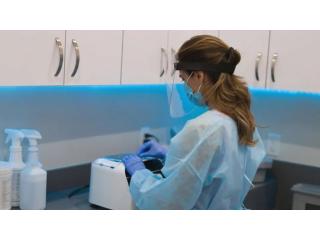
The healthcare industry is currently standing at a digital crossroads. As we transition into an era of hyper-connectivity, the sensitivity of patient data has never been higher. Standard encryption methods, such as RSA and ECC, which currently protect everything from electronic health records (EHR) to real-time surgical telemetry, rely on mathematical problems that are practically impossible for classical computers to solve. However, the advent of functional quantum computers threatens to render these defenses obsolete within the next decade.
Lattice-Based Cryptography and Medical Database Integrity
One of the most promising avenues for quantum-safe security is lattice-based cryptography. These algorithms hide data within complex multi-dimensional geometric structures that are resistant to the Shor’s algorithm, which is the primary threat quantum computing poses to current encryption. In the medical field, where data must be accessed rapidly by doctors but remain inaccessible to hackers, the efficiency of these algorithms is paramount. Implementing these advanced systems requires a workforce that is comfortable with high-stakes environments. While IT specialists manage the digital gates, the physical side of hospital safety is managed by experts who have undergone a sterile processing technician course, ensuring that the physical tools of medicine are as reliable as the digital records that guide them. This holistic approach to hospital security ensures that there are no "weak links" in the chain of patient care, whether that link is a bit of data or a surgical scalpel.
Verification of these new encryption standards involves rigorous testing across various medical IoT devices. From heart monitors to insulin pumps, every connected device represents a potential entry point for a quantum-enabled attacker. The challenge lies in the fact that many of these devices have limited processing power, making heavy encryption difficult to implement. Developers are currently working on "lightweight" quantum-safe protocols that can protect these devices without draining their batteries or causing latency. This technical precision mirrors the meticulous nature of the work done by those who finish asterile processing technician course. In both fields, there is zero margin for error. A small mistake in the sterilization of a tool or a minor bug in an encryption script can lead to catastrophic outcomes for the patient. By fostering a culture of precision across all departments, hospitals can better prepare for the complex threats of the 21st century.
The Intersection of Digital Security and Physical Sterilization Standards
When we discuss "Quantum-Safe" environments, we are really discussing the total elimination of risk. In the digital realm, this means protecting against future computing power; in the physical realm of a hospital, this means protecting against the microscopic threats of bacteria and viruses. There is a profound parallel between the logic of a cybersecurity "Clean Room" and the actual clean rooms managed by graduates of a sterile processing technician course. Both roles are dedicated to the invisible barriers that keep patients safe. A breach in data encryption can be just as deadly as an improperly sterilized instrument if it leads to the loss of a patient's allergy information or blood type during a critical procedure. As hospitals upgrade their servers to handle quantum-resistant algorithms, they must also ensure their staff is updated on the latest protocols for physical safety and equipment management.


Useful information
- Avoid scams by acting locally or paying with PayPal
- Never pay with Western Union, Moneygram or other anonymous payment services
- Don't buy or sell outside of your country. Don't accept cashier cheques from outside your country
- This site is never involved in any transaction, and does not handle payments, shipping, guarantee transactions, provide escrow services, or offer "buyer protection" or "seller certification"
Related listings
-
 Improve Your SAT Score Faster - Start SAT Preparation NowTutoring - Private Lessons - Texas City (Texas) - June 13, 2026 Check with seller
Boost your academic potential with expert SAT Preparation designed to improve scores, build confidence, and strengthen test-taking skills. Our personalized study plans, one-on-one tutoring, and real SAT practice tests help students master SAT ...
-
 Private Math Tutoring – Personalized Online Math Help for Better GradesTutoring - Private Lessons - Texas City (Texas) - June 9, 2026 Check with seller
Looking for reliable Private Math Tutoring? Smart Math Tutoring provides personalized online math lessons designed to help students strengthen their skills, improve academic performance, and gain confidence in mathematics. Our experienced tuto...
-
 Law Tutoring Boston for Focused Legal StudyTutoring - Private Lessons - Boston (Massachusetts) - June 9, 2026 Check with seller
Strong legal skill demands more than long study hours. Many students struggle with legal analysis, case interpretation, and time management during law school. Law tutoring Boston students rely on can provide structure, clarity, and practical academic...